

Introduction: Breaking the Crypto Myth (User Intent Clear Karo)
When most people hear the word blockchain, the first thing that comes to mind is Bitcoin, crypto trading, or price volatility. This mindset has created a big myth “Blockchain = Cryptocurrency”.
But the truth is very different.
Blockchain beyond cryptocurrency is about trust, transparency, security, and automation, not just digital money. Cryptocurrency is only one small use case of blockchain technology, while the real power of blockchain lies in how it can transform industries, businesses, and digital systems.
If you are:
- A beginner curious about blockchain
- A blogger or student researching future technologies
- Someone who wants to earn money without crypto trading
This blog will give you complete value.
What Is Blockchain Beyond Cryptocurrency?
Blockchain beyond cryptocurrency refers to the use of blockchain technology for non-financial and non crypto applications such as healthcare, supply chain, identity verification, voting systems, education, governance, and enterprise solutions.
In simple words:
Blockchain beyond cryptocurrency is a secure, decentralized digital record system that works even without cryptocurrency.
It focuses on:
- Data integrity
- Trustless systems
- Automation
- Transparency
Crypto coins may come and go, but blockchain as a technology is here to stay.
How Blockchain Works (Without Crypto)
To understand blockchain beyond cryptocurrency, you must understand how blockchain works at a fundamental level without involving coins or tokens.
1. Blocks
A block is a digital container that stores:
- Data (records, transactions, documents)
- Timestamp
- Cryptographic hash of the previous block
Each block is connected to the previous one, forming a chain. Once a block is added, the data inside it cannot be changed.
Example:
A block can store medical records, land ownership details, or supply chain data not money.
2. Nodes
Nodes are computers connected to the blockchain network.
Their role:
- Store copies of the blockchain
- Validate new data
- Maintain network security
Because data is stored on multiple nodes, there is no single point of failure.
No central server
No single authority
No data loss
3. Decentralization
Decentralization means:
- No central owner
- No single controlling authority
- Power distributed across the network
In traditional systems:
- Bank controls money
- Government controls data
In blockchain systems:
- Users and participants share control
This is why blockchain builds trust without intermediaries.
4. Immutability
Once data is recorded on a blockchain:
- It cannot be edited
- It cannot be deleted
- It cannot be manipulated
This feature is called immutability.
This is extremely useful for:
- Legal documents
- Educational certificates
- Property records
- Audit logs
Benefits of using Blockchain Beyond Cryptocurrency
Blockchain provides several powerful benefits that go far beyond crypto trading.
Key Benefits (SEO + Readability Optimized)
- High Security
Data is protected using cryptography and distributed storage. - Data Transparency
All authorized participants can verify data in real time. - No Middlemen
Removes brokers, agents, and third parties. - Automation via Smart Contracts
Agreements execute automatically when conditions are met. - Reduced Fraud
Immutable records make manipulation nearly impossible.
Bullet points improve user experience + Rank Math score.
Real-World Use Cases of Blockchain Beyond Cryptocurrency
Blockchain is already being used across industries without crypto involvement.
1. Supply Chain Management
- Track product movement
- Verify authenticity
- Reduce counterfeit goods
Example: Food, medicine, luxury items.
2. Healthcare Systems
- Secure patient records
- Controlled data sharing
- Tamper-proof medical history
Patients own their data, not hospitals.
3. Digital Identity Verification
- Secure online identity
- KYC verification
- Prevent identity theft
Used in banking, government services, and education.
4. Voting & Governance
- Transparent voting systems
- No duplicate voting
- Fair election processes
Ideal for digital governance.
5. Education & Certificates
- Blockchain-verified degrees
- Skill certification validation
- Prevent fake documents
History and Evolution of Blockchain Beyond Cryptocurrency
When blockchain was first introduced, it was never meant to be only about money. The idea behind blockchain was much bigger to create a trustless, transparent, and tamper proof digital system. Over time, cryptocurrency became the most popular use case, but quietly, blockchain started evolving far beyond coins and trading.
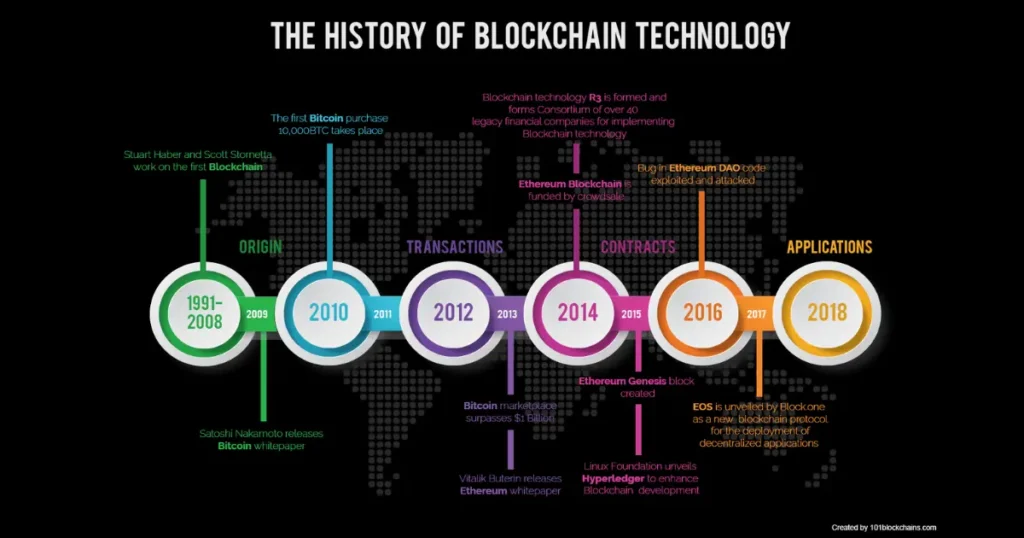
Let’s understand this journey in a simple, humanised way.
The Beginning: Blockchain as a Trust Machine (2008–2012)
Blockchain came into the spotlight in 2008 with the launch of Bitcoin. At that time, blockchain was seen mainly as the technology behind digital currency. Its main role was to record transactions securely without relying on banks or central authorities.
However, even in its early days, developers and researchers noticed something important:
The blockchain itself was more valuable than the currency running on it.
It proved that data could be:
- Stored securely
- Shared globally
- Verified without trust in a single authority
This realization planted the seed for blockchain beyond cryptocurrency.
The Shift: From Digital Money to Digital Records (2013–2016)
As blockchain technology matured, people started asking a powerful question:
“If blockchain can securely store money, why can’t it store data?“
This phase marked the evolution of blockchain into:
- Digital record keeping
- Smart contracts
- Decentralized applications
Developers began experimenting with blockchain for:
- Legal agreements
- Identity verification
- Asset ownership records
This period transformed blockchain from a financial experiment into a general purpose technology.
Enterprise Adoption: Blockchain Enters the Real World (2017–2020)
During this phase, blockchain stepped out of the crypto world and entered real industries.
Large organizations and enterprises started using blockchain for:
- Supply chain transparency
- Healthcare data security
- Banking infrastructure (without public crypto)
- Audit trails and compliance
Private and permissioned blockchains became popular because companies wanted:
- Control over access
- High security
- Regulatory compliance
This was a turning point where blockchain beyond cryptocurrency became commercially valuable.
The Trust Economy Era: Blockchain as Infrastructure (2021–Present)
Today, blockchain is evolving into a core digital infrastructure, similar to how the internet evolved.
Modern blockchain systems focus on:
- Data ownership
- Transparency
- Automation
- Digital trust
Governments, enterprises, and startups now use blockchain for:
- Digital identity systems
- Certificate verification
- Land and property records
- Secure data sharing
The focus has clearly shifted from “How much is the coin worth?” to
“How much trust does the system create?”
Where Blockchain Is Heading Next
The future evolution of blockchain beyond cryptocurrency is deeply connected to:
- Web3 ecosystems
- AI-integrated systems
- Digital governance
- Enterprise automation
Blockchain is no longer just a technology it is becoming the foundation of trust in the digital age.
How to Earn Money from Blockchain Beyond Cryptocurrency
Yes, you can earn real, legal, and long-term income from blockchain without touching crypto trading.
1. Blockchain Developer
Build blockchain-based applications and solutions.
Income Potential:
₹80,000 – ₹3,00,000/month (freelance or job)
2. Blockchain Consultant
Help businesses adopt blockchain technology.
What you do:
- Strategy planning
- Use-case analysis
- Cost optimization
3. Build Industry-Specific Solutions
Create tools for:
- Supply chain tracking
- Certificate verification
- Data security platforms
Monetization:
- SaaS subscription
- Licensing
- One-time setup fees
4. Smart Contract Services
Offer automation services for:
- Freelancers
- Real estate
- Insurance companies
5. Content, Blogging & Education
If you can explain complex topics simply:
- SEO blogs
- YouTube channels
- Online courses
- Paid newsletters
Your blog idea itself is a monetizable asset.
Companies Offering Shares in Blockchain Beyond Cryptocurrency
Blockchain itself cannot be bought, but many global companies offer shares because they develop, provide, or use blockchain technology beyond crypto. When you buy their shares, you are investing in blockchain-powered businesses, not cryptocurrencies.
1.Technology & Enterprise Blockchain Companies
These companies build enterprise-grade blockchain platforms for businesses, governments, and institutions.
- IBM
- Uses blockchain for supply chain, banking, healthcare, and identity
- Focuses on private & permissioned blockchains
- No dependency on crypto trading
- Oracle
- Offers blockchain solutions for enterprise data security
- Used in logistics, finance, and ERP systems
- Microsoft
- Provides blockchain services through cloud infrastructure
- Used for identity, record management, and enterprise apps
2. Cloud & Infrastructure Companies Using Blockchain
These companies provide blockchain tools as infrastructure, similar to cloud services.
- Amazon
- Offers managed blockchain services for enterprises
- Focuses on scalable, permissioned blockchain networks
- Google
- Uses blockchain for data integrity and Web3 infrastructure
- Supports blockchain analytics and developer tools
3. Financial & Banking Companies Using Blockchain (Without Crypto Trading)
These companies use blockchain for secure transactions and record-keeping, not speculation.
- JPMorgan Chase
- Uses blockchain for payment systems and internal settlements
- Focuses on efficiency and security
- Visa
- Uses blockchain for cross-border payment research
- Emphasis on speed and transparency
4. Supply Chain & Logistics Companies
Blockchain is widely used to track products and prevent fraud.
- Walmart
- Uses blockchain to track food and product supply chains
- Improves transparency and safety
- Maersk
- Uses blockchain for shipping documentation and logistics
- Reduces paperwork and delays
5. Consulting & IT Services Companies
These companies sell blockchain solutions to enterprises and governments.
- Accenture
- Builds blockchain systems for healthcare, banking, and government
- Infosys
- Offers blockchain-based enterprise solutions
- Focuses on automation and data security
- Tata Consultancy Services
- Develops blockchain solutions for global clients
- Strong focus on non-crypto use cases
Challenges & Limitations (Trust Building)
Google prefers balanced content, so it’s important to discuss limitations honestly.
Limitations of Blockchain Technology
1. Scalability
- Large networks process data slowly
- Performance issues with high traffic
2. Energy Consumption
- Some blockchain systems consume high energy
- Especially public networks
3. Adoption Challenges
- Businesses resist change
- Lack of skilled professionals
4. Legal & Regulatory Issues
- Laws are still evolving
- Unclear global regulations
Despite these challenges, innovation is rapidly solving these problems.
Future of Blockchain Beyond Cryptocurrency
The future of blockchain goes far beyond digital coins.
High Ranking Future Trends
Web3
- Decentralized internet
- User-owned data
- Trust-based platforms
AI + Blockchain
- Secure AI decision logs
- Transparent machine learning
- Trustworthy automation
Digital Governance
- Transparent public records
- Smart city infrastructure
- Efficient government services
Decentralized Identity
- Self-sovereign identity
- User-controlled data access
Enterprise Blockchain
- Used by banks, logistics, healthcare, and IT firms
- Private and permissioned blockchains
Future keywords = high search intent + long-term traffic.
Conclusion
Blockchain beyond cryptocurrency is often misunderstood as just another tech buzzword, but in reality, it represents a much deeper shift in how trust is created and maintained in the digital world. As we’ve seen throughout this guide, blockchain is not limited to buying, selling, or trading digital coins. Its real strength lies in building systems that are secure, transparent, decentralized, and resistant to manipulation.
From healthcare records and supply chain tracking to digital identity, governance, and enterprise solutions, blockchain is already solving problems that traditional systems have struggled with for decades. It removes unnecessary middlemen, reduces fraud, automates processes through smart contracts, and gives users greater control over their own data. These benefits make blockchain a practical and powerful technology, not just a speculative trend.
At the same time, blockchain is still evolving. Challenges like scalability, energy consumption, and regulatory uncertainty exist—but these are signs of a growing technology, not a failing one. With advancements in Web3, AI integration, decentralized identity, and enterprise adoption, blockchain beyond cryptocurrency is steadily moving toward mainstream use.
In the coming years, businesses, governments, and individuals who understand and adopt this technology early will be at a clear advantage. Whether you want to build skills, create solutions, start a business, or simply stay ahead in the digital era, learning about blockchain beyond cryptocurrency is a smart long-term investment.
Blockchain beyond cryptocurrency is not just a trend it’s the foundation of a trust-based digital future.
