
Introduction
Building an online tool sounds exciting, but the reality is very different especially when you’re trying to create something as useful as a backlink Checker Tool. Most beginners jump into tool development thinking it’s just about writing a few lines of code, adding a nice UI, and publishing it online. But soon they discover the hidden challenges no one talks about: getting accurate data, handling crawling limitations, ranking the tool on Google, and actually making users trust it.
A backlink checker Tool isn’t just another simple project. It’s a powerful SEO utility that needs smart engineering, clean design, and a deep understanding of how backlinks actually work. The good news? You can build it, even as a beginner if you know the right approach and avoid the common mistakes that make most tool creators give up early.
In this blog, we’ll break down the reality, the challenges, and the right strategies to build a high-quality backlink checker tool that not only works but also attracts real users over time.
What Is a Backlink Checker Tool and How Does It Work?
A backlink checker tool is an online tool that helps you find out which websites are linking to your site. In simple words, it tells you who is sending traffic, authority, and trust to your website. Backlinks are like digital votes—when another website links to you, Google takes it as a sign that your content is valuable.
And the more quality backlinks you have, the better your chances of ranking higher.
But here’s the problem :
Backlinks are scattered all over the internet, and manually finding them is almost impossible.
This is where a backlink checker tool becomes extremely useful.
How Does a Backlink Checker Tool Actually Work?
Even though the tool looks simple from the outside, a lot of complex work happens behind the scenes. Here’s the human friendly version of how it works-
1. Crawling the Web
Just like Google’s bots scan web pages, a backlink checker also has its own crawler that visits thousands (sometimes millions) of pages to look for links pointing to your site.
2. Detecting Links to Your Website
Whenever the crawler finds an <a> tag (a link), it checks:
- Where the link is pointing
- Whether it matches your website’s domain
- What anchor text is used
- If it’s dofollow or nofollow
If it matches your site, the tool saves that as a backlink.
3. Storing and Organising the Data
All discovered links are stored in a database.
The tool records details like-
- Referring website
- URL of the linking page
- Anchor text
- Link type
- HTTP status
- Date it was found
This helps the tool show a complete backlink profile.
4. Presenting the Results to the User
When you enter your domain in the tool :
- It quickly fetches your saved backlink data
- Organises the results into a clean report
- Shows total backlinks, domains, dofollow links, and more
Some advanced tools also calculate spam score, domain authority, and link quality.
In Short
A backlink checker tool acts like a detective for your website.
It searches the internet, collects every link pointing to your domain, and presents the information in a simple way so you can understand your site’s SEO performance.
It helps you:
- Track your backlinks
- Analyse link quality
- Identify harmful or spammy links
- Improve your SEO strategy
- Boost your rankings over time
How to Create a Backlink Checker Tool : A Step-by-Step Guide for Beginners
Building a backlink checker tool can feel overwhelming at first but it doesn’t have to be. Below is a friendly, practical, step-by-step guide that walks you from idea to a working backlink checker tool MVP. I’ll keep things simple, show small code examples, and point out the common traps so you don’t waste time.
Note: I’ll use the phrase backlink checker tool throughout so the instructions stay focused on exactly what you want to build.
1) Start with the goal: What should your backlink checker tool do?
Make a short list of core features for your first version (MVP). For a backlink checker tool, start with these essentials :
- Accept domain or URL input
- Return a list of backlinks (referring page, anchor, rel, status)
- Show total backlinks and unique referring domains
- CSV export and simple filters (dofollow/nofollow)
Keep the MVP tiny a working backlink checker tool with 3–5 features beats a half done giant.
2) Choose your data source (the most important decision)
You can build a backlink checker tool using one of three approaches :
A. Third-party API (fastest, most accurate)
- Use Ahrefs, SEMrush, Moz, Majestic APIs.
- Best for quick launch; paid but reliable.
B. Your own crawler (cheapest long-term, hardest)
- Crawl web pages, parse
<a>tags and find links pointing to target domains. - Requires crawling infra, proxy rotation, and storage.
C. Hybrid (practical)
- Use Google Search Console for verified sites + third-party API for deep data + your lightweight crawler for additional checks.
For beginners, I recommend starting with a free tier of a third-party API or GSC for verified sites, then add your crawler later.
3) Simple architecture for your backlink checker tool
A minimal architecture that works well:
- Frontend: React + Tailwind (input box, results table)
- Backend: FastAPI or Express (API endpoints)
- Worker queue: Redis + Celery or RQ for background tasks
- Database: PostgreSQL (structured backlinks), optional Elasticsearch for search
- Storage: S3 (for CSVs, snapshots)
- Hosting: Docker on AWS/GCP/DigitalOcean
This stack keeps your backlink checker tool modular and scalable.
4) Basic data model
Keep it simple:
domains table:
- id, domain, created_at
backlinks table:
- id, domain_id, target_url, referring_url, anchor_text, rel_attr, http_status, discovered_at
This structure supports most features your backlink checker tool needs.
5) How the workflow runs (user journey)
- User enters domain/URL in frontend.
- Backend checks cache (recent results).
- If empty or stale → schedule job (worker).
- Worker calls API or crawler, parses links, stores data.
- Backend returns results to user; CSV export available.
This flow makes the backlink checker tool responsive and cost efficient.
6) Quick, practical Python example (link extraction)
Use this snippet to test extraction logic locally handy when building a backlink checker tool prototype :
import requests
from bs4 import BeautifulSoup
from urllib.parse import urljoin, urlparse

def extract_backlinks(page_url, target_domain):
    try:
        resp = requests.get(page_url, timeout=10, headers={"User-Agent":"BacklinkBot/1.0"})
    except Exception as e:
        return []
    soup = BeautifulSoup(resp.text, "lxml")
    results = []
    for a in soup.find_all("a", href=True):
        href = urljoin(page_url, a["href"])
        parsed = urlparse(href)
        if parsed.netloc.endswith(target_domain):
            results.append({
                "referring_page": page_url,
                "ref_url": href,
                "anchor": a.get_text(strip=True) or "",
                "rel": " ".join(a.get("rel", [])),
                "http_status": resp.status_code
            })
    return results

# Example
print(extract_backlinks("https://example.com/some-article", "yourtarget.com"))
This is NOT production crawling but it’s perfect for prototyping your backlink checker tool logic.
7) Dedupe, normalize and score
When saving backlinks, always :
- Normalize URLs (remove fragments, standardize scheme)
- Dedupe by referring_url + target_url
- Group by referring domain (unique domain count)
- Optionally compute a simple authority estimate (e.g., number of internal links, or call Moz/Ahrefs if available)
These steps make your backlink checker tool reports useful and non-noisy.
8) UX for the backlink checker tool
Design for clarity :
- Input box (domain/URL) + example placeholder
- Summary cards: total backlinks, referring domains, dofollow %
- Table with columns: Referring Page | Anchor | Rel | Status | Discovered
- Filters: Dofollow/Nofollow, status, domain authority (if available)
- Export CSV and “Re-scan” button
A clean UX helps your backlink checker tool convert visitors into users.
9) Crawler basics (if you build one)
If you choose to crawl:
- Respect robots.txt and crawl-delay
- Use a polite user agent string
- Use sitemaps and RSS as seed sources
- Implement rate limits and proxy rotation to avoid blocks
- Store crawl snapshots for future verification
Crawling is the hard part many beginners building a backlink checker tool underestimate infra & maintenance needs.
10) Monetization & product strategy
Ways to monetize your backlink checker tool:
- Freemium: limited checks per day, paid plans for history and exports
- API access for agencies
- PDF/white-label reports for SEO consultants
- Ads on the free tier
Start free to build users — then add premium features that agencies will pay for.
11) Common mistakes to avoid
- Thinking a basic crawler will match Ahrefs/Moz coverage overnight
- Ignoring caching — re-crawling wastes credits and money
- Showing raw links without dedupe or quality signals
- Not handling legal/robots restrictions
Avoiding these keeps your backlink checker tool healthy and credible.
12) Small roadmap (first 6 weeks)
- Week 1: Prototype crawler or API fetcher + simple DB + export CSV
- Week 2: Build frontend results table, cache, and basic filters
- Week 3: Add worker queue, background jobs, re-scan feature
- Week 4: Add GSC integration (optional) and basic auth/accounts
- Week 5–6: Polish UI, add pricing, analytics, and lightweight authority scoring
Follow this and your backlink checker tool will move from prototype to early customers quickly.
13) Quick checklist before launch
- Decide data source (API vs crawler)
- Create DB schema and migrations
- Implement extraction + dedupe logic
- Build frontend results and CSV export
- Add caching & background jobs
- Add simple logging and error handling
- Respect robots.txt and legal limits
Ticking these off ensures a smooth launch of your backlink checker tool.
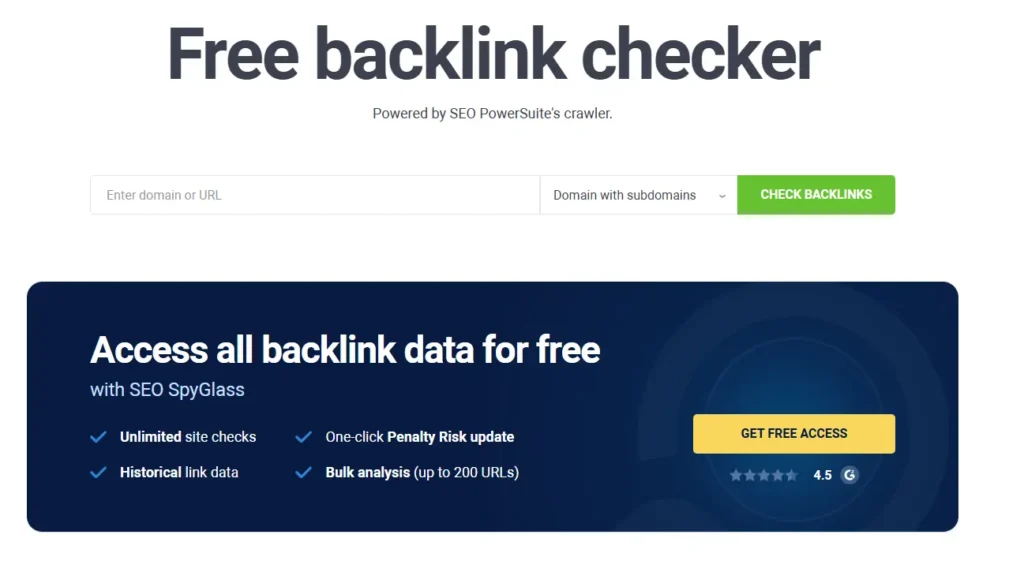
Here is an Image to show Your website will look after the Backlink Checker Tool created. you can also vist our service page for better expereance for makeing backlink checker tool
How Can You Earn Money From a Backlink Checker Tool?
Building a backlink checker tool isn’t just a technical project it can also become a long-term online income source. If you launch it smartly and offer valuable features, there are many ways to monetize it. Here are the most effective methods :
1. Freemium Model (Free + Premium Plans)
The most popular strategy is to offer a free version of your backlink checker tool with limited features, and a paid plan with full access.
Free Plan Includes:
- Limited backlink checks per day
- Basic backlink data
Paid Plan Includes:
- Unlimited checks
- Full backlink history
- CSV exports
- Deep crawl results
- Competitor analysis
This model helps you attract users for free and convert serious SEO users into paying customers.
2. Subscription-Based Pricing (Monthly / Yearly Plans)
Your backlink checker tool can generate predictable monthly income through recurring subscriptions.
Example Plans:
- Starter: $9/month
- Pro: $29/month
- Agency: $99/month (multiple teammates)
Agencies, bloggers, and business owners are willing to pay for fresh and accurate backlink data.
3. Sell API Access to Developers and Agencies
If your backlink checker tool generates unique or reliable data, you can offer an API.
Agencies, SaaS platforms, and SEO dashboards will pay to use your data in their own applications.
API income is often passive and very scalable.
4. White-Label SEO Reports for Freelancers & Agencies
You can allow users to download a white-label backlink report that includes:
- Their branding/logo
- Backlink list
- Anchor text insights
- Link quality score
SEO freelancers can use these reports for their clients and pay you to generate them.
5. Display Ads on the Free Version
If your backlink checker tool gets high traffic :
- Google AdSense
- Ezoic
- Media.net
can generate passive income.
Even $10–$20 per day becomes a solid revenue stream when traffic grows.
6. Promote Affiliate Products Inside the Tool
You can earn commissions by recommending SEO tools inside your backlink checker tool, such as :
- Hosting services
- SEO courses
- Keyword tools
- Link-building services
If 1,000 people use your tool monthly, even a 2–3% conversion rate can give you consistent earnings.
7. Offer Paid Competitor Analysis Reports
A normal backlink check is free, but deep competitor analysis can be a premium feature.
Example:
“Analyze your competitors’ backlinks for $5 per report.”
Simple, effective, and highly valuable.
8. Build a Multi-Tool SEO Platform
Once your backlink checker tool starts getting users, you can add more tools :
- Keyword generator
- Meta tag generator
- Broken link checker
- Domain authority estimator
A complete SEO toolkit attracts more users → which increases earning potential.
9. Sponsored Listings or Promotions
You can offer companies the option to:
- Promote their SEO course
- Advertise their tool
- Highlight their blog
directly inside your backlink checker tool.
Brands pay well for targeted exposure.
If you want to learn how to create a Backlink Checker Tool,Then according to me, Skillgenerator is the best platform for learn this.
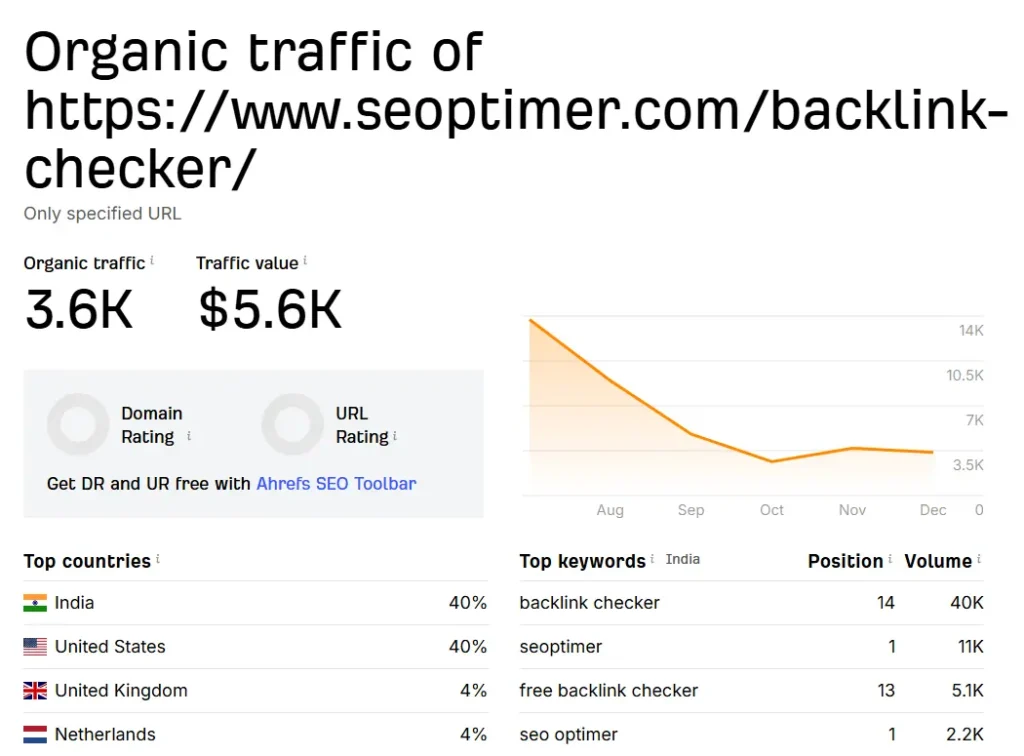
here is a live example through image of earning from Backlink checker Tool-
Final Thoughts
A backlink checker tool can become a serious online business if you treat it like a long-term project. You can earn through ads, subscriptions, API access, or premium features. Once your tool gains trust and traffic, the earning opportunities grow naturally.
Conclusion
Creating a backlink checker tool may seem challenging at first, but once you understand the process, it becomes an exciting journey. You’re not just building another online tool—you’re creating something that helps people improve their website, track their SEO growth, and understand their online presence better. That’s real value.
Whether you choose APIs, build your own crawler, or start small with a basic version, every step brings you closer to launching a useful and impactful product. And the best part is that your backlink checker tool can grow with you. As you add new features, improve data accuracy, and build trust with users, your tool slowly becomes more than just a project—it becomes a long-term digital asset.
From generating passive income to helping businesses understand their backlinks, a backlink checker tool opens the door to learning, earning, and experimenting with SEO technology. If you stay consistent, keep improving, and listen to user feedback, your tool has the potential to stand out in the crowded SEO world.
In the end, the journey of building a backlink checker tool is not just about coding; it’s about creating something that makes the web a little easier for others—and that’s what truly makes it worth it.
