

In today’s digital world, AI generated content is everywhere. From blogs and website pages to assignments and marketing copy, artificial intelligence tools are helping people create content faster than ever before. But this rapid growth has also created a new challenge how do we know whether content is written by a human or generated by AI?
This is where an AI Content Detector Tool becomes extremely important.
What Is an AI Content Detector Tool?
An AI Content Detector Tool is a software application that analyses a piece of text and predicts whether it is human written or AI-generated.
Instead of checking copied content (like plagiarism tools), this tool focuses on:
- Writing patterns
- Sentence predictability
- Language structure
- Statistical signals
The tool then provides a probability score, such as:
- 85% AI-generated
- 15% Human-written
These tools are widely used by:
- Bloggers and SEO professionals
- Content agencies
- Teachers and universities
- Website owners and publishers
- Businesses that value originality
In simple words, an AI Content Detector Tool helps verify content authenticity in an AI driven world.
How Does an AI Content Detector Tool Work?
Although the technology sounds complex, the working process can be understood in simple steps.
1. Text Input Analysis
The user pastes text into the tool. This text may be:
- A blog post
- An article
- An essay
- Website content
The system first cleans and prepares the text for analysis.
2. Language Pattern Evaluation
AI-generated content often follows:
- Predictable sentence structures
- Balanced grammar
- Repetitive tone
- Low randomness
The tool analyses:
- Word usage
- Sentence length
- Flow consistency
- Repetition patterns
3. Statistical Signals (Perplexity & Burstiness)
Most AI detectors rely on two important signals:
- Perplexity: Measures how predictable the text is
- Burstiness: Measures variation in sentence structure
Human writing usually has:
- Higher variation
- More natural randomness
AI content often looks too perfect.
3. Statistical Signals (Perplexity & Burstiness)
Most AI detectors rely on two important signals:
- Perplexity: Measures how predictable the text is
- Burstiness: Measures variation in sentence structure
Human writing usually has:
- Higher variation
- More natural randomness
AI content often looks too perfect.
4. Machine Learning Prediction
The cleaned and analysed text is passed to a trained machine learning or deep learning model.
This model has already learned the difference between:
- Human-written text
- AI-generated text
The output is a confidence score.
5. Final Result Display
The tool displays results such as:
- Likely AI-generated
- Mostly human-written
- Mixed content
Some advanced tools also highlight AI like sentences.
How to Build an AI Content Detector Tool
Now let’s talk about the most important part how you can build your own AI Content Detector Tool.
Step 1. Choose the Right Technology Stack
Backend
- Python (highly recommended)
- Flask or FastAPI
AI & NLP Libraries
- Transformers (Hugging Face)
- PyTorch or TensorFlow
- Scikit-learn (optional)
Frontend
- HTML, CSS, JavaScript
- Or React / Next.js for advanced UI
Database (Optional)
- MongoDB or MySQL for storing user history
Step 2. Collect Training Data
Your AI model needs two types of data:
Human Written Content
- Blog articles
- News websites
- Essays
- Wikipedia text
AI Generated Content
- AI-written blogs
- Chatbot responses
- Paraphrased AI text
Important: Keep both datasets balanced to avoid bias.
Step 3. Preprocess the Data
Before training, clean the text by:
- Removing HTML tags
- Lowercasing text
- Removing extra spaces
- Tokenising sentences
- Limiting text length
Clean data = better accuracy.
Step 4: Train the AI Detection Model
You have two main approaches:
Option 1: Transformer Based Model
- Fine-tune a pre-trained language model
- High accuracy
- Best for professional tools
Option 2: Traditional Machine Learning
- Use features like:
- Word frequency
- Sentence length
- Perplexity
- Faster but slightly less accurate
The model should classify:
- 0 = Human
- 1 = AI
Step 5: Detection Logic Implementation
When a user submits text:
- Text is cleaned
- Converted into model-readable format
- Prediction is made
- Result is returned with confidence score
Example:
“This content is likely AI generated (78%)”
Step 6: Build a Simple User Interface
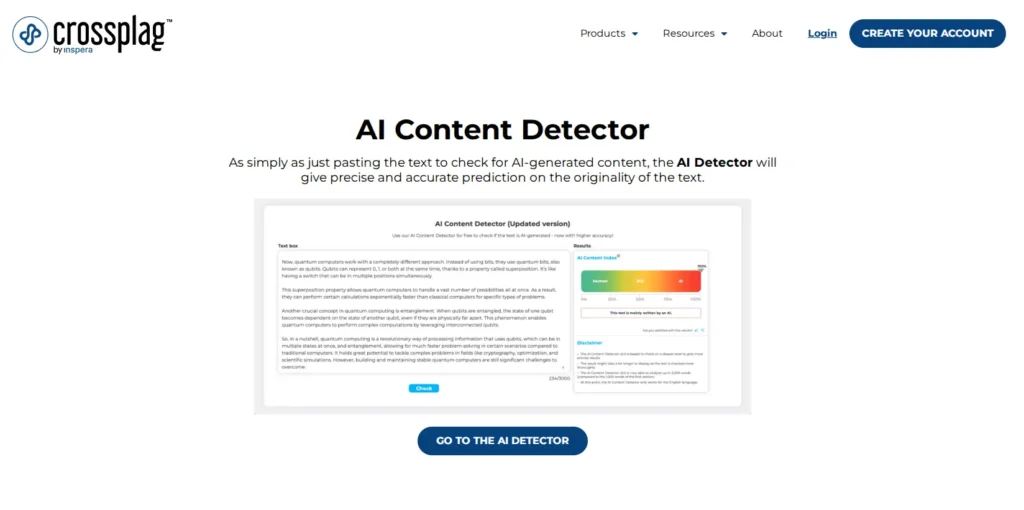
A good UI should include:
- Large text box
- “Check Content” button
- Clear result display
- Simple disclaimer
Speed and simplicity are key.
Step 7: Test & Improve Accuracy
To improve results:
- Test mixed AI + human content
- Reduce false positives
- Retrain model regularly
- Allow human-edited AI detection
Remember: No AI detector is 100% accurate.
Here is an image given below which you can see and understand how your tool site will be made and you can also visit to this website and see how it works by clicking on this link- AI Content Detector Tool
Key Features of an AI Content Detector Tool
A successful AI Content Detector Tool usually includes:
- AI vs Human percentage score
- Sentence-level highlighting
- Support for long content
- Fast processing speed
- Clean and simple interface
- API access (optional)
- Free and premium plans
Benefits of an AI Content Detector Tool
1. Maintains Content Originality
Helps ensure content is authentic and trustworthy.
2. Improves SEO Quality
Reduces low quality AI spam and improves long term SEO safety.
3. Saves Time
Instant analysis instead of manual checking.
4. Supports Education Integrity
Useful for teachers and institutions to check assignments.
5. Builds Trust
Verified content increases reader and client confidence.
6. Encourages Responsible AI Usage
Promotes human editing and ethical AI use.
How to Earn Money from an AI Content Detector Tool
An AI Content Detector Tool is not just useful it can also be profitable.
1. Google AdSense
- Display ads on tool pages
- High-intent traffic
- Passive income model
2. Freemium Model
- Free checks with word limits
- Paid plans for:
- Longer text
- Advanced detection
- No ads
3. Affiliate Marketing
Promote:
- AI writing tools
- SEO tools
- Content optimisation software
Earn commissions on each sale.
4. API Access for Developers
- Offer paid API plans
- Monthly subscriptions
- Ideal for businesses and platforms
5. SaaS Subscription Model
Turn your tool into a:
- Monthly subscription service
- Content verification platform
This creates recurring income.
If you want to learn how to make a AI Content Detector Tool,Then according to me, Skillgenerator is the best platform for learn this.
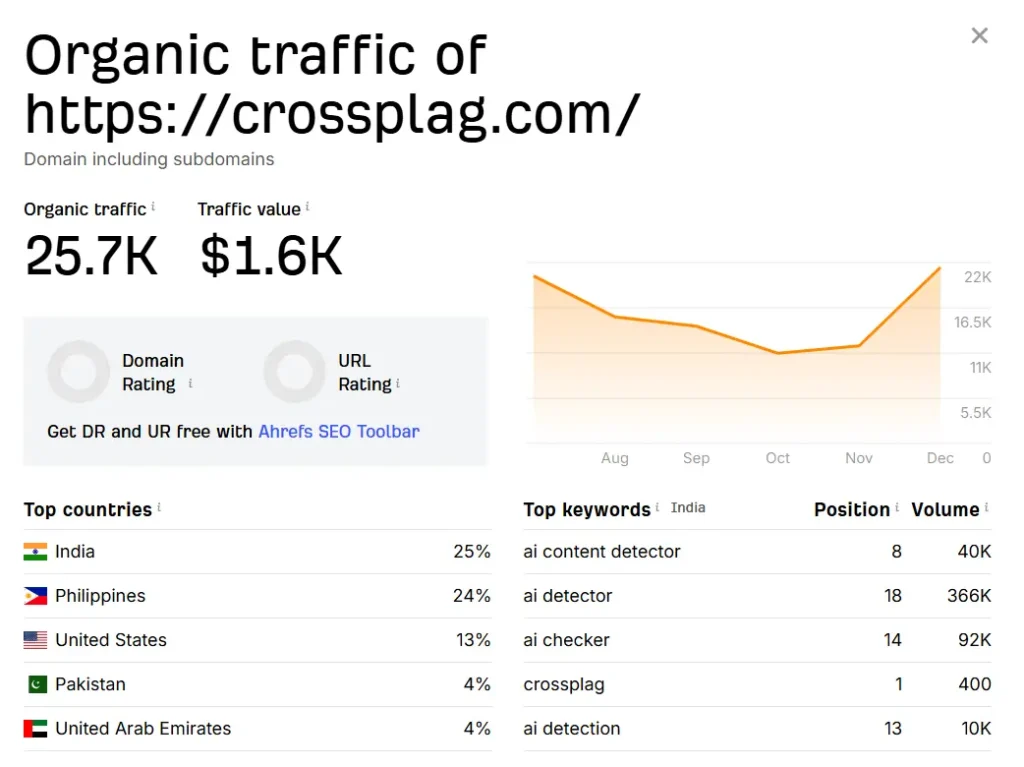
here is a live example through image of earning from AI Content Detector Tool-
Future of AI Content Detector Tools
As AI writing tools continue to grow:
- Demand for detection tools will increase
- Accuracy will improve with better models
- Integration with CMS and SEO tools will rise
AI detection is becoming a core part of content quality control.
Conclusion: The Real Value of an AI Content Detector Tool
In today’s fast moving digital world, AI has made content creation easier than ever, but it has also blurred the line between human creativity and machine generated text. This is exactly where an AI Content Detector Tool becomes truly valuable.
This tool is not about fighting AI or rejecting modern technology. Instead, it’s about bringing balance. AI can help speed up writing, generate ideas, and improve productivity but human thinking, emotion, experience, and originality still matter the most. An AI content detector helps you protect that human touch.
For bloggers, it acts like a quality filter, ensuring your content feels natural, trustworthy, and search engine friendly before you hit the publish button. For SEO professionals and agencies, it becomes a safety checkpoint, reducing the risk of publishing robotic or low quality AI content that could harm long-term rankings. For teachers and institutions, it supports honest learning and encourages students to express their own understanding instead of relying completely on machines.
From a business perspective, an AI Content Detector Tool is more than just a utility it is a digital asset. With the right features, accuracy, and user experience, it can attract high intent traffic, build authority in the SEO and content niche, and generate consistent income through ads, subscriptions, or API access. Most importantly, it solves a real problem, which is the foundation of any successful online product.
As AI technology continues to evolve, the need for content verification, transparency, and trust will only grow stronger. Websites, publishers, and brands that care about quality will always look for reliable ways to check and validate content. That means AI content detector tools are not a short term trend they are a long term necessity.
In the end, an AI Content Detector Tool helps answer one simple but powerful question:
“Does this content truly feel human?“
If your tool can help people confidently say “yes” to that question, you are not just building software—you are building trust, credibility, and long-term value in the digital world.
